Vegans and Vegetarians
Every year, more and more people choose to reduce or eliminate meat from their diets and adopt a more plant-based approach to eating. This decision may be motivated by ethical concerns, such as animal welfare and environmental protection, or by personal health goals, including improving overall well-being and managing body weight. Numerous health organizations recognize the potential health benefits of a well-balanced vegetarian diet, particularly when it emphasizes whole grains, fruits, vegetables, legumes, nuts, and seeds.
However, it is essential to ensure that your vegetarian or vegan diet is properly planned to meet all your nutritional needs and prevent nutrient deficiencies.
What Does It Mean to Be Vegetarian?
According to international vegetarian organizations, such as the Vegetarian Society and the Vegetarian Resource Group, a vegetarian is someone who does not consume red meat, poultry, fish, seafood, or their by-products, regardless of whether they consume dairy products or eggs.
A vegetarian diet is primarily based on plant-based foods, including fruits, vegetables, legumes, nuts, and seeds. However, certain types of vegetarian diets, which we will explore in the following sections, also allow the consumption of dairy products and eggs.
Therefore, vegetarians exclude the following foods from their daily diet:
Red meat: Pork, beef, lamb, and goat.
Poultry: Chicken and turkey.
Fish and seafood: Fish, shellfish, and other seafood.
Animal-derived by-products: Ingredients derived from meat, poultry, or seafood, such as meat-based gelatin, animal broths, and fish-based ingredients.

What Are the Different Types of Vegetarian Diets?
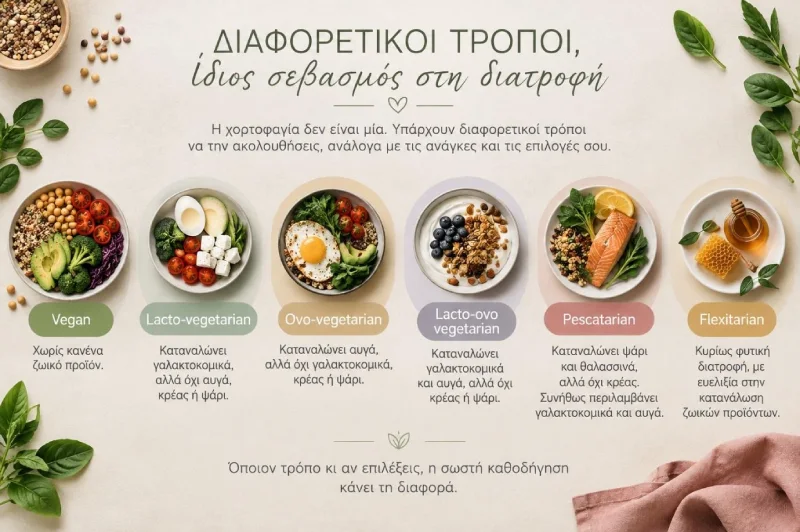
Vegetarian diets can be divided into several categories, depending on which animal-based foods are excluded.
Lacto-Ovo Vegetarian
Lacto-ovo vegetarians exclude meat, fish, and seafood from their diets but continue to consume dairy products and eggs.
This is one of the most common forms of vegetarianism worldwide.
People following this diet consume foods such as milk, cheese, yogurt, eggs, and dishes containing these ingredients, alongside a wide variety of plant-based foods.
Lacto-Vegetarian
Lacto-vegetarians avoid meat, fish, seafood, and eggs but continue to include dairy products in their diet.
Their meals typically consist of vegetables, fruits, grains, legumes, nuts, seeds, milk, cheese, and yogurt.
Vegan (Strict Vegetarian)
Vegans exclude all animal-derived foods and ingredients from their diets.
This means they do not consume meat, fish, seafood, dairy products, or eggs. Vegans also generally avoid honey and other animal-derived products.
A well-planned vegan diet can provide the nutrients needed for good health. However, particular attention should be paid to nutrients such as vitamin B12, iron, calcium, vitamin D, iodine, zinc, and omega-3 fatty acids.
Reliable vitamin B12 sources, such as fortified foods or supplements, are particularly important for individuals following a fully plant-based diet.
Semi-Vegetarian and Pescatarian Diets
Semi-vegetarianism, also known as flexitarian eating, involves primarily consuming plant-based foods while occasionally including certain types of meat or other animal products.
Another popular approach is the pescatarian diet, which excludes meat and poultry but allows fish and seafood.
Pescatarians may also consume dairy products and eggs, depending on their individual preferences.
These dietary approaches offer flexibility while encouraging greater consumption of plant-based foods.

How Can a Dietitian-Nutritionist Help?
Adopting a vegetarian or vegan lifestyle can be a positive step toward improving your eating habits, but it is important to ensure that your diet remains nutritionally balanced.